
Kaishun Ypsilantis - In five pieces
Hey readers!
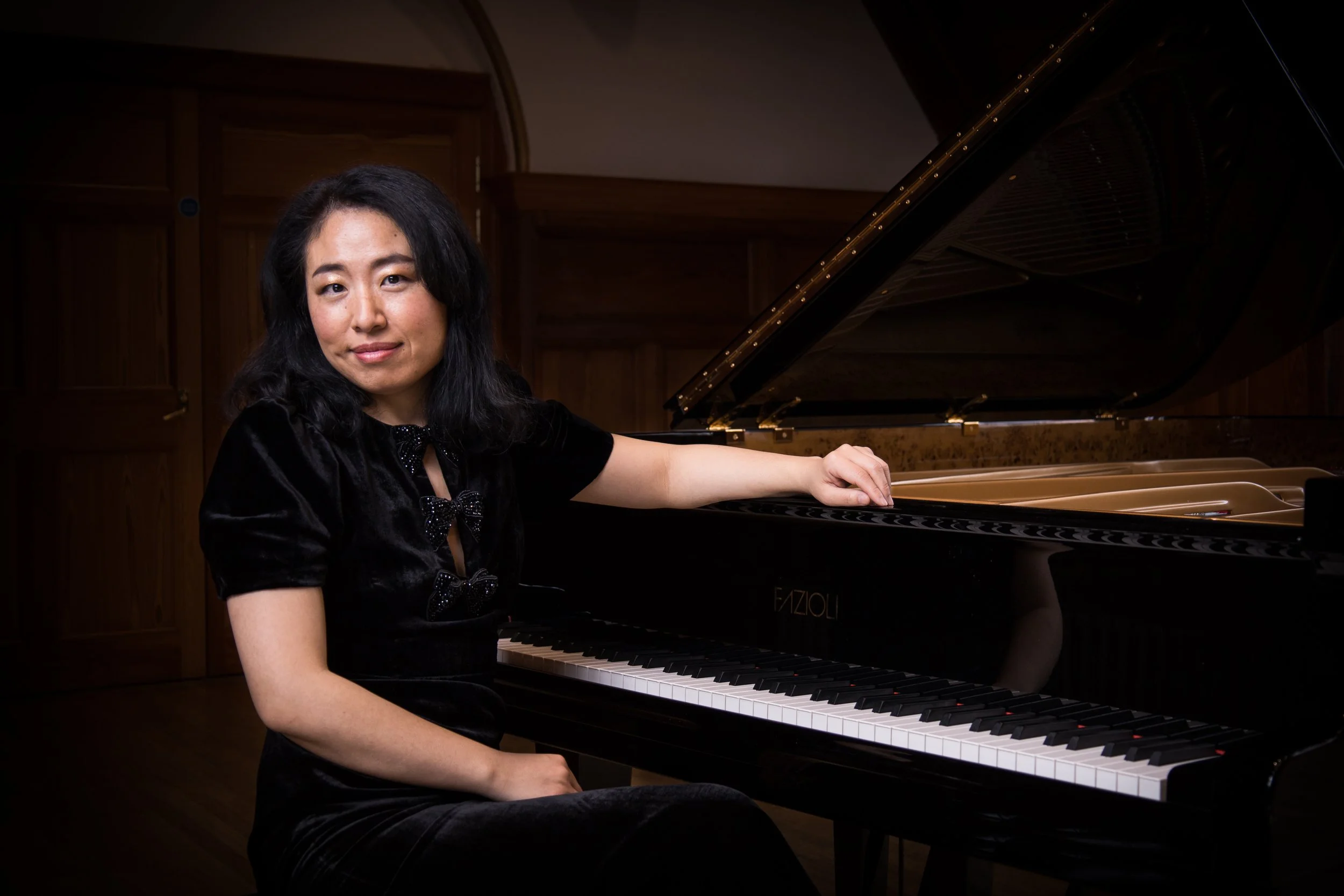
For our next In Five Pieces blog, I had a chat with pianist Kaishun Ypsilantis with us on Saturday 27th June at Shoreditch Treehouse.
Kaishun is a collaborative pianist who works regularly with singers and instrumentalists. She graduated with distinction in Collaborative Piano (Master of Performance) from the Royal College of Music in 2025, studying with Simon Lepper, Roger Vignoles, Julian Jacobson, and Howard Williams. She frequently supports young musicians in exams and competitions, nurturing the next generation of performers. Kaishun is a registered external accompanist at the RCM and a member of the College’s Professional Engagement Service, collaborating with colleagues on concerts and events at distinguished venues. Passionate about community engagement, she volunteers in churches, care homes and libraries, performing lunchtime concerts to bring meaningful music to diverse audiences. Her contributions have been formally recognised with an award from the Lord Mayor of Westminster Councillor Paul Dimoldenberg in 2026.
Waltz in C-sharp minor, Op. 64 No. 2 - Chopin
(Watch here → https://www.youtube.com/watch?v=b_E51SV0Zus)
Frédéric Chopin was a Polish composer and pianist of the Romantic era, best known for transforming piano music through his poetic style and expressive writing. His Waltz in C-sharp minor was published in 1847 as part of his Op. 64 set, alongside the much more famous “Minute Waltz.” Unlike some of his lighter waltzes, this one feels far more intimate and melancholic, constantly shifting between elegance and something darker underneath.
Although Chopin called these pieces “waltzes,” they were never really intended for dancing. They belonged to the world of nineteenth-century Parisian salons, where audiences would sit and listen closely rather than head to the dance floor. Chopin transformed the waltz from light entertainment into something deeply expressive and emotionally complex.
Why it stays with me:
My very first Chopin piece. When I was nine years old, I accidentally heard this piece while walking down the corridor of a music school. I immediately became fascinated by how beautiful it sounded.
This waltz begins with four sharps and later changes into five flats in the middle section. For a young piano student, it was definitely challenging. It not only improved my note-reading skills, but also taught me patience and perseverance. I learned how to sit through difficulties, stay focused and keep working until I could finally play the piece fluently.
2. Piano Concerto No. 3 - Sergei Rachmaninoff
(Watch here → https://www.youtube.com/watch?v=5bX_yRzCuM4)
Sergei Rachmaninoff was a Russian composer, pianist and conductor famous for his sweeping melodies, huge piano textures and intensely emotional music. His Third Piano Concerto has developed an almost mythical reputation among pianists because of its extraordinary technical difficulty. Written in 1909 for his first tour of the United States, the concerto is packed with enormous chords, endless runs and terrifyingly difficult passages that seem designed to test the limits of human stamina.
Despite its fearsome reputation, the concerto is loved not just because it is difficult, but because of its huge emotional range. It moves between moments of overwhelming grandeur and extraordinary vulnerability, with long lyrical melodies appearing suddenly out of massive orchestral textures. The concerto gained even wider fame through the 1996 film Shine, helping cement its legendary status in the piano repertoire.
Why it stays with me:
I first discovered this concerto through the film Shine, which was inspired by the life of David Helfgott, an Australian pianist who studied at the Royal College of Music before struggling with mental health challenges.
This concerto expresses immense pain, yet at the same time reveals extraordinary beauty. It taught me that no matter how difficult the journey of becoming a musician can be, we must continue pushing our boundaries. Even when life becomes overwhelming, we can always stand up again and try once more.
3. Moon River - Henry Mancini
(Listen here → https://www.youtube.com/watch?v=MKnZ174_kWk)
Henry Mancini was an American composer best known for his film and television music, including The Pink Panthertheme and Moon River. Written with lyricist Johnny Mercer for the 1961 film Breakfast at Tiffany’s, the song became instantly iconic after Audrey Hepburn sang it in one of the film’s most memorable scenes.
The song went on to win the Academy Award for Best Original Song and has since been recorded by countless artists. Johnny Mercer reportedly wrote the lyrics while thinking about his childhood in the American South, which may explain the song’s nostalgic and dreamlike quality. Despite becoming a jazz and pop standard, the melody itself is remarkably simple, which is part of why it feels so timeless.
Why it stays with me:
I first heard this song through the film Breakfast at Tiffany’s, beautifully sung by Audrey Hepburn.
This music taught me to dream. No matter where we are in life or what we do, if there is even the smallest chance of becoming who we wish to be, we should keep trying. Sometimes we become tired, and that is completely fine.
Even as a mother of three children, I still carry that young girl within me - the one who continues to wonder what comes next.
4. Die schöne Müllerin - Franz Schubert
(Listen here → https://www.youtube.com/watch?v=r5itbR608Pg)
Franz Schubert was an Austrian composer of the early Romantic period who became one of the most important figures in German song. Die schöne Müllerin, composed in 1823, is considered one of the greatest song cycles ever written. Based on poems by Wilhelm Müller, it follows the story of a wandering miller who falls in love before descending into jealousy and heartbreak.
One of the most remarkable things about the cycle is the role of the piano. Rather than simply accompanying the singer, Schubert uses it to paint the entire world of the story — flowing streams, spinning mill wheels and emotional tension all emerge through the accompaniment. The work helped establish German Lieder as one of the central musical genres of the nineteenth century.
Why it stays with me:
I can never forget my very first German Lieder song cycle. My professor in Japan introduced me to this work while I was studying there.
At that time, I was arrogant. I arrived late for classes and eventually burnt bridges with a professor who later had a major influence over my studies, leading me to fail my accompaniment course.
Looking back now, I realise that experience was necessary. Instead of losing my passion for song accompaniment, it grew even stronger. I learned humility, gratitude and attentiveness. Those difficult experiences eventually led me to achieve a distinction in my accompaniment studies.
5. Allerseelen, Op. 10 No. 8 - Richard Strauss
(Listen here → https://www.youtube.com/watch?v=JKVMhedy9us)
Richard Strauss was a German composer and conductor known for both his huge orchestral works and his richly expressive songs. Allerseelen, composed in 1885 when Strauss was still in his early twenties, has become one of his most loved Lieder. The title refers to All Souls’ Day, a Christian day of remembrance for the dead, and the song reflects on memory, longing and lost love.
Although Strauss later became famous for enormous orchestral works like Also sprach Zarathustra, his songs reveal a much more intimate side of his writing. Allerseelen is especially admired for its soaring vocal line and lush piano accompaniment, which create an atmosphere of warmth and nostalgia rather than dramatic grief.
Why it stays with me:
This was one of my audition pieces in 2023 for a late audition at the Royal College of Music.
A singer was supposed to perform with me, but did not arrive. To my surprise, Simon Lepper, who was sitting on the audition panel, came onto the stage and played the singer’s part for me.
It was the first time I had ever performed with one of my favourite collaborative pianists. In that moment, I learned not only about music-making, but also about professionalism, generosity and how to support another musician with grace.
Kaishun is joining us at Shoreditch Treehouse on 27th June, to play with our guest instrumentalist Levi Andreasson.
Grab your tickets to avoid missing out!


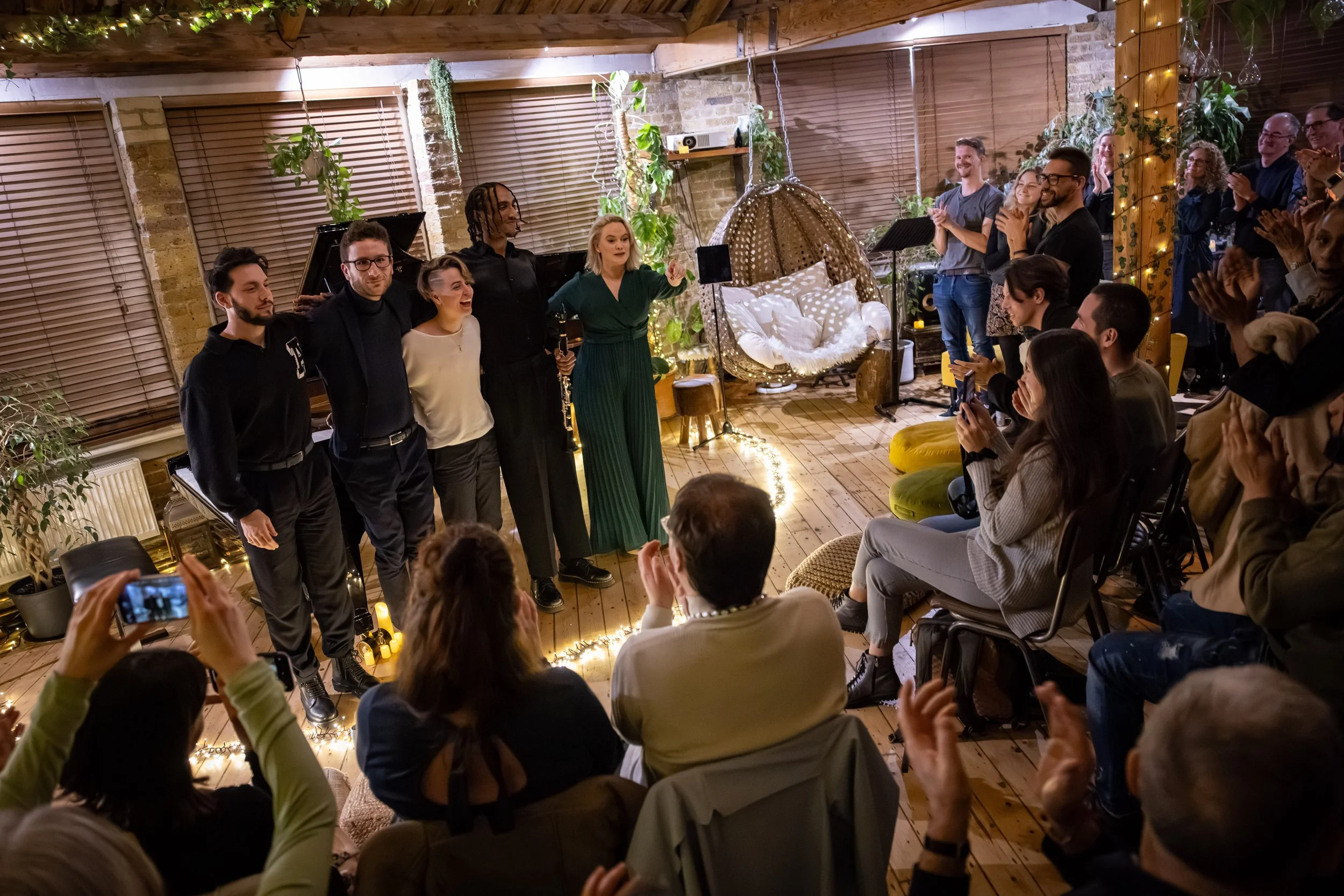

Experience DEBUT's flagship secret concert at the magical Shoreditch Treehouse, a hidden gem nestled in the heart of Shoreditch, with a Steinway Concert Grand piano under a canopy of twinkling fairy lights.
MUSICIANS
Shafali Jalota - soprano
Pedro Lopez - flute
Panaretos Kyriatzidis - collaborative pianist
Jonathon Tester - host
Sam Peña - resident pianist & improvisor