
Lydia Shariff - In five pieces
Hey readers!
For our next In five pieces blog, I had a chat with mezzo soprano Lydia Shariff. Lydia is making her debut with us at Shoreditch Treehouse on the 28th March!
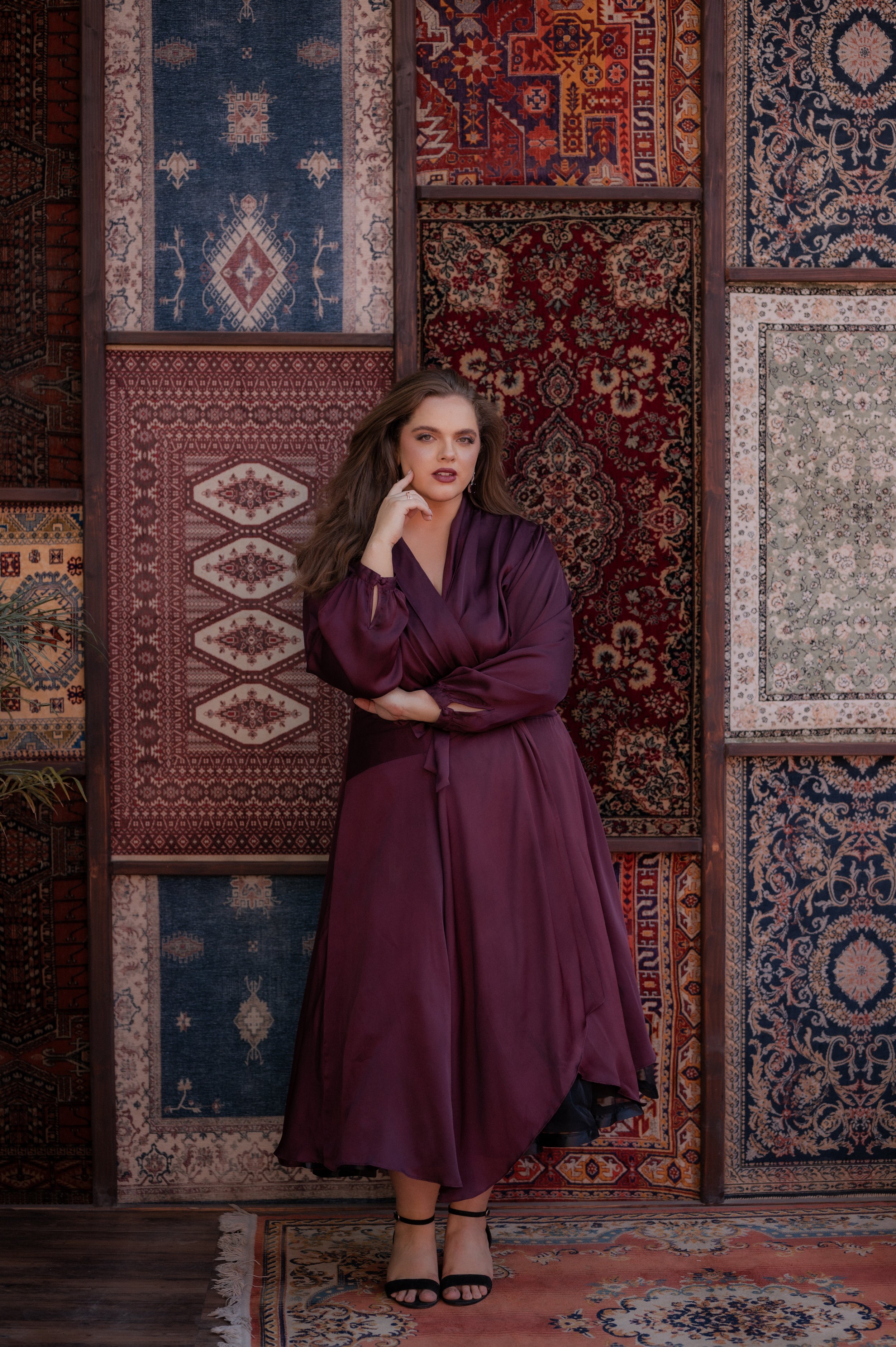
Lydia Shariff is a British mezzo-soprano and recent Opera School graduate of the Guildhall School of Music and Drama. Known for her “commanding” presence and “luxurious” tone, she’s just as at home in opera as she is in song and even jazz.
Recent and upcoming highlights include Orlando (cover) in Handel’s Orlando at Longborough Festival Opera, and her debut with English Touring Opera as Sorceress in Dido and Aeneas. She’s also been a guest artist with the Royal Ballet and Opera, performed at the Royal Liverpool Philharmonic Orchestra, and appeared in the world premiere of The Magic Flute II: The Curse by Damon Albarn and Jeremy Sams in Paris.
A sought-after concert soloist, Lydia’s repertoire includes Mozart’s Requiem, Handel’s Messiah, and Rossini’s Petite Messe Solennelle. She’s worked with leading artists including Roderick Williams, Thomas Allen, Anne Evans, and Susan Bullock.
A former Britten Pears Arts Young Artist, Lydia has also been recognised by British Youth Opera and the International Opera Awards Foundation. Alongside performing, she’s passionate about outreach and regularly works with young people and community projects.
1. Plain Gold Ring - Nina Simone
(Listen here → YouTube link)
Originally written by Earl Burroughs, Plain Gold Ring became something altogether deeper in the hands of Nina Simone. She recorded it for her 1959 debut album, Little Girl Blue, and transformed it with a dark, almost hypnotic 3/4 swing that became one of her early signature sounds.
Simone, classically trained at the Juilliard School before forging her own path through jazz, blues, and civil rights activism, had a rare ability to merge technical control with raw emotional truth. Her version of this song feels less like performance and more like confession - restrained, simmering, and completely haunting.
Why it stays with me:
This piece is so utterly timeless and fascinating in its simplicity. In all honesty, I think this piece really encapsulates the absolute genius of Nina Simone and her works, because in one very simple ostinato, Simone builds the most wonderfully painful song of a doomed love affair.
My love for Nina Simone began at a very young age and my obsession with her music and sound world has not yet dwindled. As a musician who was influenced by both the classical greats such as Bach, as well as earthy Americana folk music, I really feel deeply attached to and understood when listening to her music. I have always loved her voice despite its ‘imperfections’ and her fantastic storytelling abilities really inspire me as a performance to give my whole self dolly to the story I am telling.
2. Tajdar-e-Haram - Atif Aslam (Coke Studios)
(Listen here → YouTube link)
A reimagining of a centuries-old qawwali popularised by the Sabri Brothers, Atif Aslam’s 2015 performance for Coke Studio became one of the platform’s most viewed releases. A na’at - a devotional song in praise of the Prophet Muhammad - it holds deep spiritual significance in Sufi tradition. Known mainly for pop and playback music, Atif bridges sacred qawwali and contemporary production, building from intimate intensity to soaring power.
Qawwali is a form of Sufi devotional music from South Asia, especially associated with Pakistan and northern India. It features a lead singer, chorus, harmonium and hand percussion, and often builds from slow, meditative phrases to intense, ecstatic climaxes - designed to express deep spiritual longing and connection with the divine.
Why it stays with me:
I first came across this beautiful interpretation of the traditional qawwali song ‘Tajdar-e-Haram’ about 10 years ago and I instantly fell in love with both the enchanting song and the man who introduced me to it (he is now my husband!).
Not only do I have a deeply sentimental attachment to this piece, I am so constantly amazed by the beautiful artistry of both qawwali musicians and also the high complex language of the poetry. I had always heard the sounds of the most famous qawwal of all time Nusrat Fateh Ali Khan when growing up due to my father’s brilliant music taste, but being introduced to this wonderful interpretation by Atif Aslam was quite life changing. The lyrics are deeply spiritual and filled with the hope of a renewed connection with the divine and the desire to visit the beautiful city of Medina (a city of spiritual significance for Muslims). My husband and I spent lots of time in Pakistan with our daughter, and listening to qawwali always transports me to our home over there.
3. Ca’ The Yowes - Kathleen Ferrier
(Listen here → YouTube link)
A traditional Scottish folk song that became closely associated with Kathleen Ferrier, Ca’ the Yowes perfectly suited her unmistakable contralto - a voice often described as both earthy and luminous. Kathleen Ferrier rose to fame during and just after the Second World War, and despite a tragically short career (she died at just 41), she became one of Britain’s most beloved singers.
Her performances of English and Scottish folk songs helped bring them into mainstream recital programming. In Ca’ the Yowes, there’s no excess - just clear storytelling, warmth, and a deep sense of landscape and longing.
Why it stays with me:
I first heard the iconic voice of Kathleen Ferrier in my teens because I heard it in the house of my Yorkshire grandmother. At that time I had no idea how significant the sound of that voice would become to me.
When I was 16 I was diagnosed with thyroid cancer and my throat surgeries and cancer treatments were at UCLH in London. In the hospital I was treated on an oncology ward that was sponsored by The Kathleen Ferrier Trust and I remember listening to an album of her interpretations of British folk songs whilst waiting for a difficult appointment. Perhaps I felt a strange sort of one sided connection to Kathleen Ferrier only due to this particularly strange string that held our stories together, but I do think her voice is so incredibly individual and honest in its sound.
I heard this beautiful song “Ca The Yowes” in that sterile hospital waiting room, and I must have listened to it about a million times since. This song struck me in the simplicity and the beautiful Robert Burns poetry that tells a story of young love. Since my daughter was born, this is a song that I sing to her very often as a lullaby and I know that she and I both seek comfort in its beautiful, lilting and familiar melody.
4. The Little Match Girl Passion - David Lang
(Listen here → YouTube link)
Pulitzer Prize-winning composer David Lang wrote The Little Match Girl Passion in 2007, earning the Pulitzer for Music in 2008. A co-founder of the influential Bang on a Can collective, Lang is known for his distinctive post-minimalist style - repetitive yet emotionally direct.
In this piece, he intertwines Hans Christian Andersen’s tragic tale with texts from Bach’s St Matthew Passion, creating a modern Passion setting scored for just four singers and sparse percussion. The result is intimate, ritualistic, and quietly devastating - a meditation on suffering and compassion told through striking musical simplicity.
Why it stays with me:
I studied an undergraduate degree in academic music at the University of Birmingham graduating a decade ago in 2016. Before beginning at UoB, I had experienced choral singing in different capacities and I had always loved the feeling of performing alongside other voices, but this interest was brought to a new level when I began singing with BUS (Birmingham University Singers) under the baton of Simon Halsey. One of the first pieces we performed when I joined in 2013 was The Little Match Girl Passion by David Lang - and being introduced to this piece truly changed my musical life. I had never before been so deeply engaged in classical music and I listened to it on repeat even when out of rehearsals.
This piece follows the tragic story of the Little Match Girl but also the musical structure is of a Passion, and my God, it is heart-wrenching. The beautiful impact of Lang’s minimalistic style and harmonic language are both beautiful and sometimes difficult to listen to. Every few months, especially if I’ve been feeling emotionally disconnected, I like to sit in a dark room and listen to this passion the whole way through. I always cry, and I always see the image of the poor little girl as clear as any movie could possibly show.
5. Who Knows Where The Time Goes - Fairport Convention
(Listen here → YouTube link)
Written by Sandy Denny in her early twenties, Who Knows Where the Time Goes became one of the defining songs of the British folk revival. Fairport Convention’s 1969 recording helped pioneer British folk-rock, blending traditional influences with electric instrumentation.
Denny (one of the most distinctive voices of her generation) later became the only British female singer to feature on a Led Zeppelin studio album. The song itself captures that universal feeling of watching life move faster than we expect: gentle, reflective, and timeless in its quiet honesty.
Why it stays with me:
Folk music has always had a strong impact on my musical upbringing and I would spend many hours on car journeys between London and Yorkshire listening to albums of music with my dad. Listening to albums of folk music from the 1970’s became a huge interest. The words are both powerful and tender, and the voice of Sandy Denny (who composed this song) is so incredibly haunting - Nina Simone also does an incredibly interpretation of this song!
There really is something so achingly beautiful about the poetry of this song:
“I am not alone
while my love is near me
I know it will be so
‘til it’s time to go
So come the storms of winter
and then the birds in spring again
I have no fear of time
For who knows how my love grows?
And who knows where the time goes?”
This is another song that I have sung to my daughter during many sleepless nights, and I hope this song is in my heart whenever it is my own time to go.
Make sure to grab your tickets for Lydia’s concert on 28th March at Shoreditch Treehouse!



Experience DEBUT’s atmospheric Secret Concert series south of the rive at the Brunel Museum, set inside the extraordinary Thames Tunnel Shaft — a hidden, cathedral-like chamber with breathtaking acoustics. Expect candlelit cabaret seating, soaring brick walls, and world-class musicians performing just a few feet away.
MUSICIANS
Shafali Jalota soprano
Pedro Lopez flute
Panaretos Kyriatzidis collaborative pianist
Lizzie Holmes soprano & host
Sam Peña resident pianist & improvisor