
Zoe Barnett - In five pieces
Hey readers!
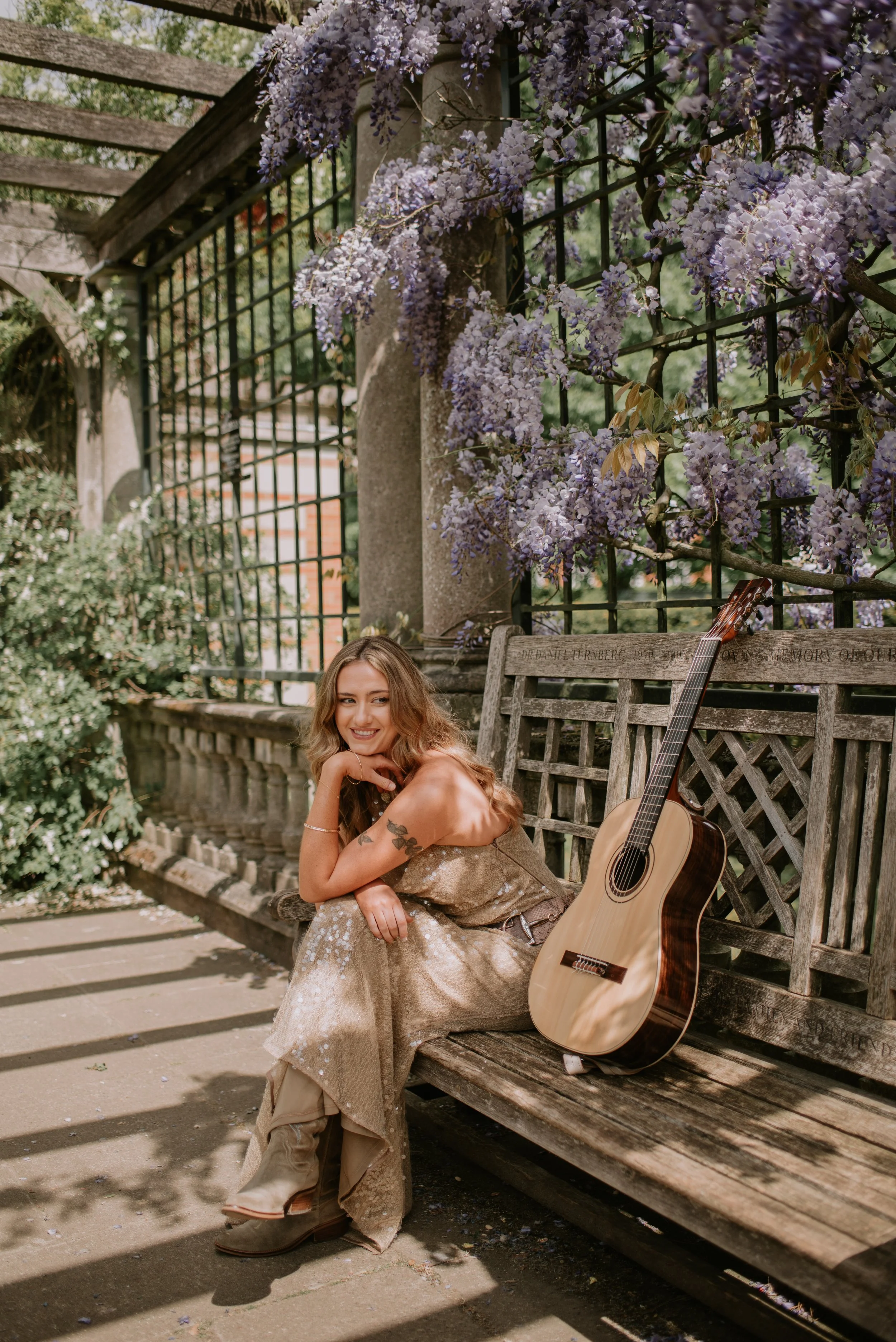
For our next In five pieces blog, I had a chat with guitarist Zoe Barnett. Zoe is making her debut with us at Shoreditch Treehouse on the 28th February!
Zoe Barnett is a British classical guitarist recognised for her expressive performances, distinctive artistic voice and engaging online presence. Born into a musical family in Chichester, she began playing at the age of four, inspired by her mother, also a classical guitarist. Alongside guitar, she studied piano and singing, shaping her broad musical foundation.
Zoe completed a Master’s degree at the Royal College of Music, studying with Gary Ryan and Christopher Stell. She has performed across the UK and internationally at venues including Wigmore Hall, Kings Place and the Shanghai Grand Theatre, and was an International Guitar Foundation Young Artist at the London Guitar Festival. She made her concerto debut in 2018 and continues to develop a varied career spanning solo, chamber and contemporary work.
Known for performing while standing - an unconventional approach that brings physical freedom and heightened communication to her concerts - Zoe also teaches in London and shares her work widely online, helping to connect new audiences with the classical guitar.
1. Five Bagatelles: I. Allegro - William Walton
(Listen here → Watch Zoe’s performance)
Written in 1971 for Julian Bream (a legendary English classical guitarist), Walton’s Five Bagatelles marked the composer’s first work for solo guitar. Already a leading figure in British music, Walton brought his sharp rhythms and modern harmonies to the instrument, expanding its serious concert repertoire.
The opening movement, Allegro, is energetic and rhythmically driven, with angular lines and biting chords that demand precision and control. The piece played an important role in establishing the guitar’s place on the 20th-century concert stage and remains a staple of advanced performance today.
Why it stays with me:
The first piece that truly changed my life was the first movement, Allegro, from William Walton’s Five Bagatelles. It is both technically demanding and rhythmically complex, and it has a reputation for being something of a nightmare to perform (especially the opening, despite its seemingly simple open-string semiquavers!). It took me over two years to feel genuinely comfortable performing it, and it was the first piece that really tested my patience in terms of getting the music to come together in performance.
At first, my practice followed the usual note-learning process. However, some of the chords are so awkward that my standard routines simply weren’t enough. I began searching for ways to make the shifts more efficient and discovered that initiating the movement from my elbow, rather than just reaching with my fingers, made a huge difference. It may sound like a very niche, guitar-specific detail, but it completely transformed how I approach technical practice.
I later performed the piece at a Guitar Day honouring Julian Bream at the Royal College of Music. I was scheduled to play at 10 a.m. on the main stage, and the performance was being live-streamed. I remember feeling incredibly nervous - and not entirely awake at that hour. It was one of those moments where you have to stop overthinking and simply commit. That performance remains one of the most memorable for me. The recording is currently on YouTube, and I’m very proud of it.
2. Popular Persian Ballads- Lily Afshar
(Listen here → Watch Zoe’s performance)
Popular Persian Ballads is a celebrated album by Iranian-American guitarist Lily Afshar, released in the late 1990s. Afshar, one of the first women to earn a doctorate in classical guitar, brings Persian traditional melodies to the classical guitar, blending intricate rhythms, modal scales, and expressive ornamentation.
The album highlights the rich cultural heritage of Persian music while showcasing Afshar’s virtuosity and innovative arrangements. It’s widely regarded as a bridge between Middle Eastern musical traditions and Western classical technique, introducing audiences to the poetic depth and rhythmic complexity of Persian ballads.
Why it stays with me:
The Popular Persian Ballads arranged by Lily Afshar have not only changed my life but have become incredibly impactful, and I think they will continue to be for years to come. I came across these pieces when I was looking for Iranian music to perform in support of the Woman, Life, Freedom movement, as a friend was organising a charity concert. Throughout her life, Lily was committed to spreading awareness of Iranian music through the instrument. I hadn’t encountered these pieces before, but I fell in love with them as soon as I started playing them. At first, I didn’t fully realise the weight they carry for Persian people.
These pieces have taken me all over the world. I’ve recorded them in Italy and Germany, played them on the radio in the Netherlands, and performed them for international audiences during a cruise contract in 2024. Videos and recordings of me playing them have been watched widely on YouTube.
Their importance really becomes clear through the Iranian community - so many people have stories connected to these songs. They are celebration pieces that have been sung and played for hundreds of years. Every time I perform or share them online, I’m reminded of the vast community who have lived with this music throughout their lives. With the ongoing protests in Iran, it feels more important than ever to keep this music alive through performance.
3. Choro da Saudade - Agustín Barrios
(Listen here → YouTube link)
Choro da Saudade is a solo guitar piece by Paraguayan composer Agustín Barrios (1885–1944), one of the greatest figures in Latin American guitar music. Written in Barrios’ signature style, it blends the lively, syncopated rhythms of the Brazilian choro with his expressive, lyrical melodies.
The piece captures a bittersweet nostalgia - “saudade” in Portuguese - through intricate fingerwork, rich harmonies, and flowing ornamentation. It remains a beloved work in the classical guitar repertoire, celebrated for its technical demands and emotional depth.
Why it stays with me:
Choro da Saudade by Agustín Barrios was one of the first pieces that introduced me to storytelling and embodying deep emotion in my playing. The title loosely translates to something that is lost and evokes a sense of nostalgia. The piece has a beautiful core A-section melody that returns throughout the different sections.
I remember feeling very connected to my own memories while playing this piece, and I used them to shape different emotions in the melody each time it came back. I later took the piece on tour to China, performing it for numerous audiences I had never played to before. That piece made me feel truly safe on stage because I felt I could genuinely express myself through the music - and that’s something I’ve carried forward in my playing ever since.
4. Requiem in D minor, K. 626 - Mozart
(Listen here → YouTube link)
Mozart’s Requiem is his haunting final masterpiece, left unfinished when he died in 1791 and later completed by his student Franz Xaver Süssmayr. Full of dramatic intensity, soaring melodies, and intricate counterpoint, it captures grief, awe, and transcendence all at once.
It has become one of the most iconic works in classical music, performed around the world as a moving tribute to life, death, and everything in between.
Why it stays with me:
In my first year of music college, we had a large chorus and orchestral project performing Mozart’s Requiem. We started in the first or second week of term, when no one really knew what was going on in their newfound university life. But we all came together for this project, and I remember those first rehearsals - the power of everyone’s voices and the collective respect for the work was amazing to experience. It’s just such incredible music.
I think the way it changed my life was this: as a soloist, especially on a relatively quiet instrument, it showed me that even at music college there is always a community to be found among like-minded people. That project really grounded me during my first term because it was about creating music together rather than practising alone.
Although, in the concert I almost fainted - which, in hindsight, is quite funny. I had to crouch down within the chorus and wait for the feeling to pass because there was absolutely no way I could run off stage with around 200 people up there.
5. Histoire du Tango - Astor Piazzolla
(Listen here → YouTube link)
Astor Piazzolla’s Histoire du Tango (1986) is a four-movement piece for guitar and flute that traces the evolution of the tango from its early 20th-century roots to the modern, jazz-influenced style Piazzolla pioneered. Each movement captures a distinct era of tango, blending rhythm, drama, and sensuality.
The piece is a brilliant mix of tradition and innovation, showcasing Piazzolla’s genius for melody, rhythm, and storytelling through music. It’s become a staple in both guitar and flute repertoire, celebrated for its flair, energy, and unmistakable Argentine soul.
Why it stays with me:
The Histoire du Tango Suite by Astor Piazzolla for flute and guitar was the first ‘serious’ piece of chamber music I played. Back in the day, I used to juggle guitar and flute throughout my school years. My mum is a guitarist (she taught me when I was younger), and we started playing Café 1930 when I was around 13 or 14 - I was on flute and she was on guitar.
We performed it at festivals and concerts around the county where we live, and it was amazing to collaborate with her in that way, even though at times I found it musically challenging. Over a few years, we ended up playing three movements from the suite together.
When I went to sixth form, I swapped parts and played the guitar part with another flautist. I’m currently collaborating with a violinist, and we’ve programmed the suite together as well. I think it’s amazing to have repertoire that stays with you for years - that you live with, return to, and then put down again. You always find something new within the music, so perhaps it continues to change my life each time I play it with someone new.
You can catch Zoe at our next Secret Concert at Shoreditch Treehouse, on Saturday 28th February.
Get your tickets here!


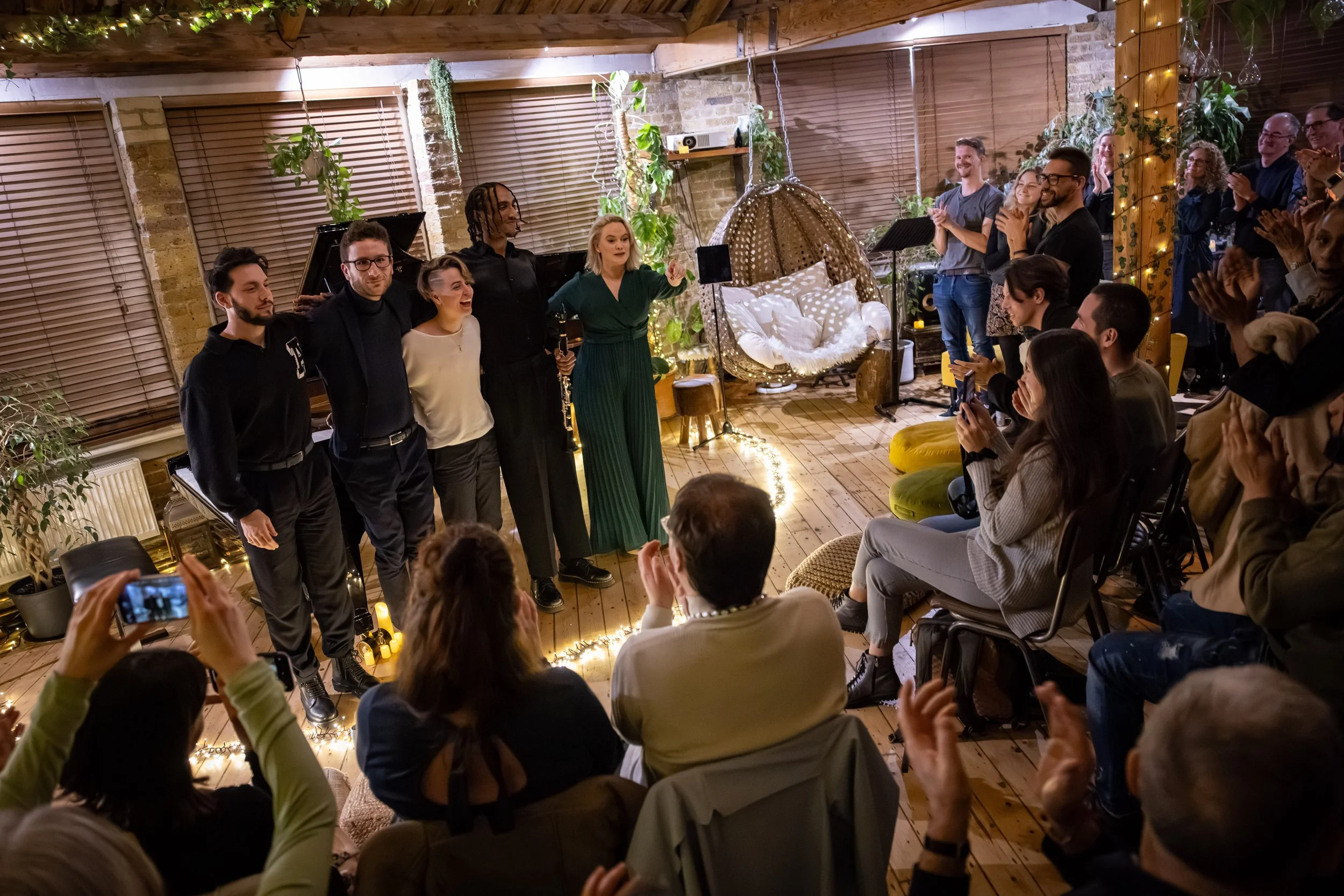

Experience DEBUT’s atmospheric Secret Concert series south of the rive at the Brunel Museum, set inside the extraordinary Thames Tunnel Shaft — a hidden, cathedral-like chamber with breathtaking acoustics. Expect candlelit cabaret seating, soaring brick walls, and world-class musicians performing just a few feet away.
MUSICIANS
Shafali Jalota soprano
Pedro Lopez flute
Panaretos Kyriatzidis collaborative pianist
Lizzie Holmes soprano & host
Sam Peña resident pianist & improvisor