
Patrick Dow - In five pieces
Hey readers!
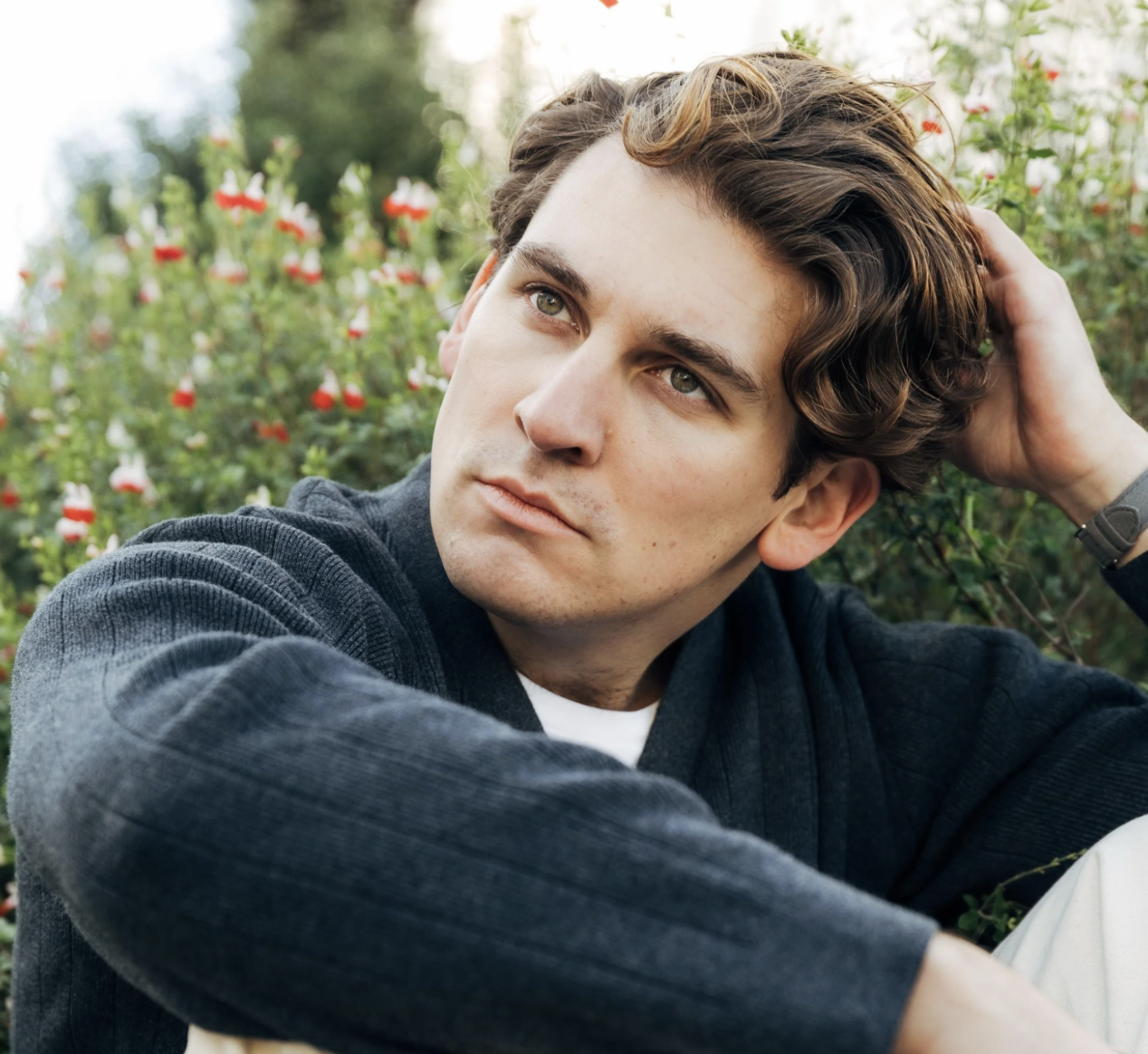
For our next In five pieces blog, I had a chat with baritone Patrick Dow. Patrick is making his debut with us at for our April double bill: 16th April at Brunel Museum & 18th April at Shoreditch Treehouse.
Samling Artist and Solti Accademia alumnus Patrick Dow has made his debut at the London Coliseum for English National Opera, The Count in The Marriage of Figaro at Garsington Opera Festival and Cadogan Hall for a sold-out concert of timeless classics. He also spent a summer season performing in Don Giovanni, L’Elisir d’Amore, Semele, and The Rake’s Progress at Glyndebourne.
Before completing his Masters (Royal Academy of Music) and post-Masters (Guildhall), he studied at UNC Chapel Hill, where he was president of the Clef Hangers a capella group - performing for President Barack Obama at the White House, President Ólafur Ragnar Grímsson of Iceland and opening for John Legend at the Superbowl weekend.
Throughout his college career in the United States, he regularly performed at major sporting events, singing in stadiums with live audiences of up to 100,000 people, and in broadcasts reaching millions - including NCAA basketball, NASCAR, ACC Football, and NHL games. This summer, Patrick will be making his debut at The Grange Festival singing one of the lead roles (Marcello) in La Boheme.
“When I look back at my journey so far, it’s surprisingly easy to map it through music. Certain pieces don’t just remind me of where I was, they capture entire chapters of my life. From school stages to opera houses, each one marks a shift in how I understood myself as a performer.”
Stars from les Misérables
(Listen here → https://www.youtube.com/watch?v=dfoJEYicu7c)
“Stars” is a defining moment for Javert, the rigid, morally uncompromising inspector in Les Misérables. Written by Claude-Michel Schönberg with lyrics by Herbert Kretzmer, the song lays bare his absolute faith in order and justice, all framed through striking celestial imagery. Its almost hymn-like melody gives the impression that Javert doesn’t just follow the law - he worships it. That sense of moral certainty makes his eventual downfall feel all the more powerful and tragic.
Why it stays with me:
Like many performers, it all began at school. “Stars” was my go-to piece for talent shows, and it quickly became something of a signature. Alongside that, I was completely immersed in school musicals (The Phantom of the Opera, Miss Saigon, Into the Woods, Guys and Dolls to name a few), which is really where I fell in love with performing as a whole. We also took 3 productions to the Edinburgh Fringe Festival - a real treat.
It wasn’t just singing either; I got hooked on dancing too, training in ballet, ballroom and Latin. Looking back, this period was all about saying yes to everything and discovering the joy of being on stage. “Stars” represents the very beginning: the first time I realised performing could be more than just a hobby.
2. Libera Me from Requiem (Fauré) - Gabriel Fauré
(Listen here → https://www.youtube.com/watch?v=VMdoq7uE74A)
Gabriel Fauré was a French composer of the late 19th and early 20th centuries, known for his refined, expressive style and for shaping the transition from Romanticism to modern French music. The “Libera Me” is one of the most dramatic moments in this Requiem, even though Gabriel Fauré takes a notably gentle, consoling approach to the Requiem as a whole - far removed from the fire-and-brimstone style of many earlier settings. Fauré himself described the work as “dominated from beginning to end by a very human feeling of faith in eternal rest,” which helps explain its calm, almost luminous quality.
Originally written as a standalone piece before being incorporated into the larger work, the “Libera Me” contrasts the steady authority of the baritone solo with sudden surges of choral intensity - especially in the “Dies irae.” Even here, though, Fauré resists full-blown drama, hinting at judgment day without ever losing his characteristic sense of restraint and peace.
Why it stays with me:
As a music scholar and later Head Chorister, choral music became central to my development. “Libera Me” was always the moment everyone looked forward to during chapel, and for me, it never lost its impact. Unlike much of the choral repertoire, it’s written for a baritone, and the emotional depth of the piece is extraordinary, giving the baritone a real chance to shine in a choral setting. This piece is something of a fan favourite at school, but it also represents the beginning of truly connecting with classical music on a deeper level, understanding how voice, text, and harmony can combine to create something profoundly moving, even if it was written over one hundred years ago.
3. From Now On from The Greatest Showman film with the UNC Clef Hangers
(Watch Patrick’s performance → https://www.youtube.com/watch?v=-OzvusvSCxg&list=RD-OzvusvSCxg&start_radio=1)
“From Now On,” from The Greatest Showman, is a rousing redemption anthem for P.T. Barnum, blending gospel, folk, and musical theatre influences. Written by Benj Pasek and Justin Paul, it’s become a favourite for vocal groups thanks to its satisfying build from a single voice to a full ensemble.
Released in 2017, The Greatest Showman is inspired by the life of P. T. Barnum and celebrates ambition, reinvention, and spectacle. The film’s soundtrack became hugely popular, with songs like “From Now On” taking on a life of their own - especially in choir and a cappella performances.
Why it stays with me:
Moving to the University of North Carolina at Chapel Hill on a scholarship was a massive step, and one that completely broadened my horizons. I was performing in opera and choir, but joining the UNC Clef Hangers (an all-male a cappella group) added a whole new dimension.
We toured internationally, recorded albums, and performed in some incredible settings, including singing for President Barack Obama at a White House Holiday Party and even opening for John Legend at a Super Bowl event.
For my final concert, I chose “From Now On” as my solo piece from the Greatest Showman. I also managed to bring the university’s oldest all-female group on stage to perform it with us, which made the whole thing feel huge, both musically and emotionally. That performance had everything: energy, scale, and a real sense of occasion. It felt like the perfect way to close that chapter. The performance is still up on YouTube if you fancy having a look!
4. Hai Già Vinta La Causa from The Marriage of Figaro - Wolfgang Amadeus Mozart
(Watch here → https://www.youtube.com/watch?v=-l6Owvlib2s)
Wolfgang Amadeus Mozart was a prolific and influential Classical composer, renowned for his extraordinary melodic gift and for shaping opera, symphony, and chamber music with remarkable clarity and emotional depth.
This fiery aria from The Marriage of Figaro gives Count Almaviva a rare burst of uncontrolled emotion, as he rages at being outwitted by his own servants. Blending recitative and aria, it captures his frustration and wounded pride in real time. Mozart reflects this through quick shifts in tempo and mood, making the music feel as volatile as the Count himself. More broadly, The Marriage of Figaro is known for its sharp wit and social commentary, turning the traditional class system on its head as servants repeatedly outsmart their master. That mix of humour, satire, and brilliant character writing is a big part of what has made the opera such an enduring favourite.
Why it stays with me:
Coming back to the UK to study for my Master's at the Royal Academy of Music and then going on to the Guildhall School of Music and Drama for Opera School was the start of things becoming more focused on a professional career in music (and more real!).
Since then, I’ve been lucky enough to work with companies like Glyndebourne, English National Opera, and Garsington Opera. My debut at the London Coliseum as Fiorello was a huge milestone - even if, famously, the role doesn’t come with an aria…
Not long after, I covered, and then performed, Il Conte at Garsington. Singing “Hai già vinta la causa” in a full production for the first time was a real turning point. It’s such a defining baritone aria, and stepping into that role on a major stage felt like everything starting to click into place.
Now, with Marcello in La Bohème coming up at The Grange Festival, it feels like that trajectory is continuing.
5. Caruso - Lucio Dalla
(Listen here → https://www.youtube.com/watch?v=I84FCXqA1Vk)
Written in 1986, “Caruso” is a tribute to the legendary tenor Enrico Caruso, inspired by Lucio Dalla’s stay in a Sorrento hotel where the singer once lived. Blending pop with an operatic style, the song imagines Caruso looking back on love and loss near the end of his life. Its soaring melody and emotional intensity have made it a crossover classic, later performed by artists from Luciano Pavarotti to Andrea Bocelli.
Caruso himself was one of the first truly global opera stars of the early 20th century, famous for his powerful voice and hugely influential recordings. At a time when recording technology was still new, his voice reached audiences far beyond the opera house, helping to popularise opera around the world.
Why it stays with me:
More recently, I’ve been thinking a lot about what it actually means to be a classical singer today. The lines between genres are becoming more fluid, and that really excites me.
“Caruso” was one of the first pieces where I felt I could explore that space. I performed it at a concert in Brixton, and it immediately connected, with me and with the audience. Since then, it’s become something I return to often for live concerts, and I’ve recently recorded it in the studio. It sits in this brilliant crossover space: part operatic, part contemporary, completely driven by storytelling. For me, it represents where I want to go next; creating programmes that feel more open, more varied, and more connected to modern audiences, without losing the integrity of classical technique.
If the earlier pieces shaped my foundation, “Caruso” feels like a glimpse of the future."
Make sure to grab your tickets for April!

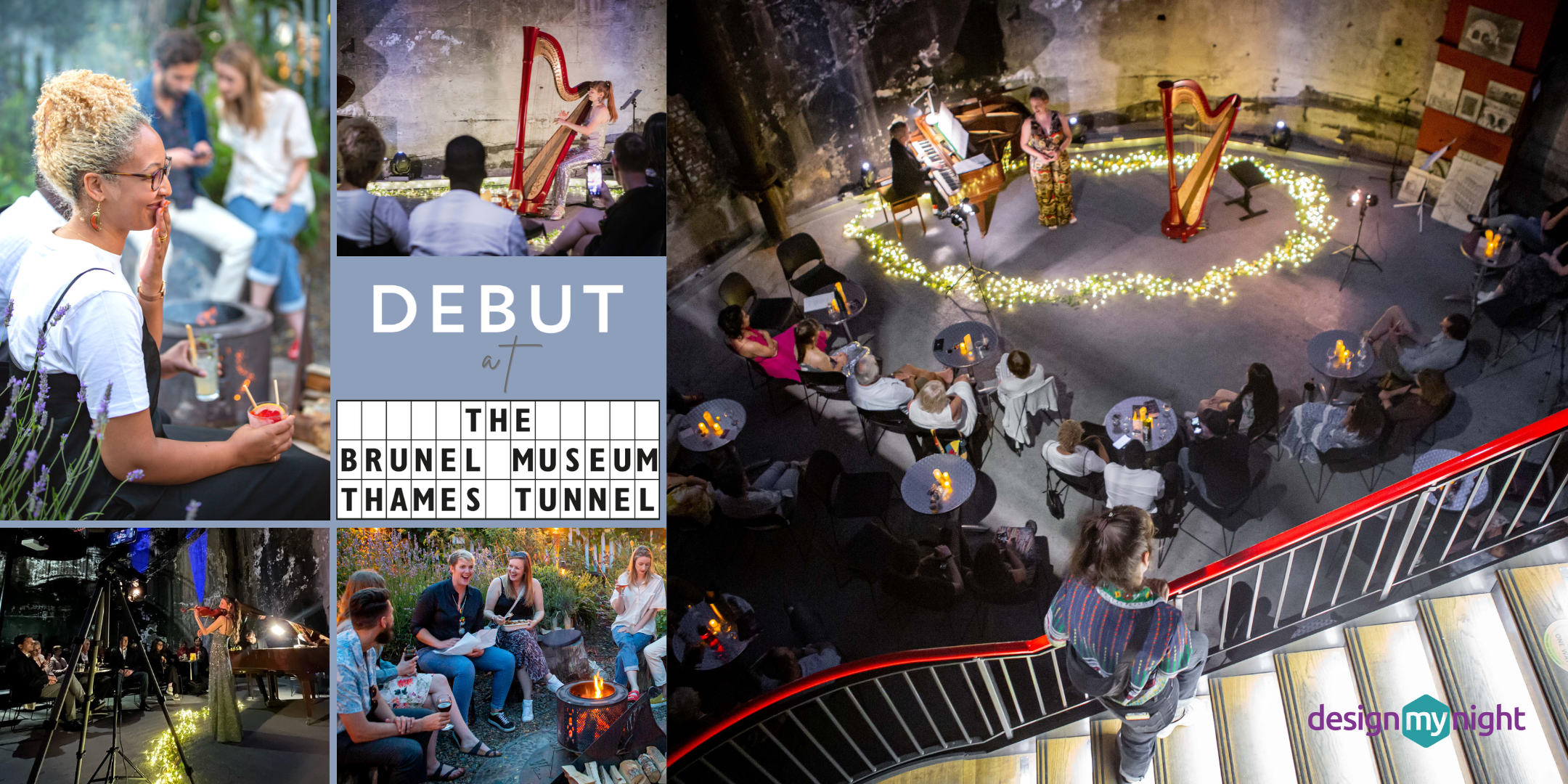

Experience DEBUT’s atmospheric Secret Concert series south of the rive at the Brunel Museum, set inside the extraordinary Thames Tunnel Shaft — a hidden, cathedral-like chamber with breathtaking acoustics. Expect candlelit cabaret seating, soaring brick walls, and world-class musicians performing just a few feet away.
MUSICIANS
Shafali Jalota soprano
Pedro Lopez flute
Panaretos Kyriatzidis collaborative pianist
Lizzie Holmes soprano & host
Sam Peña resident pianist & improvisor